Extensive finishing
Rewilding
What we’re working towards
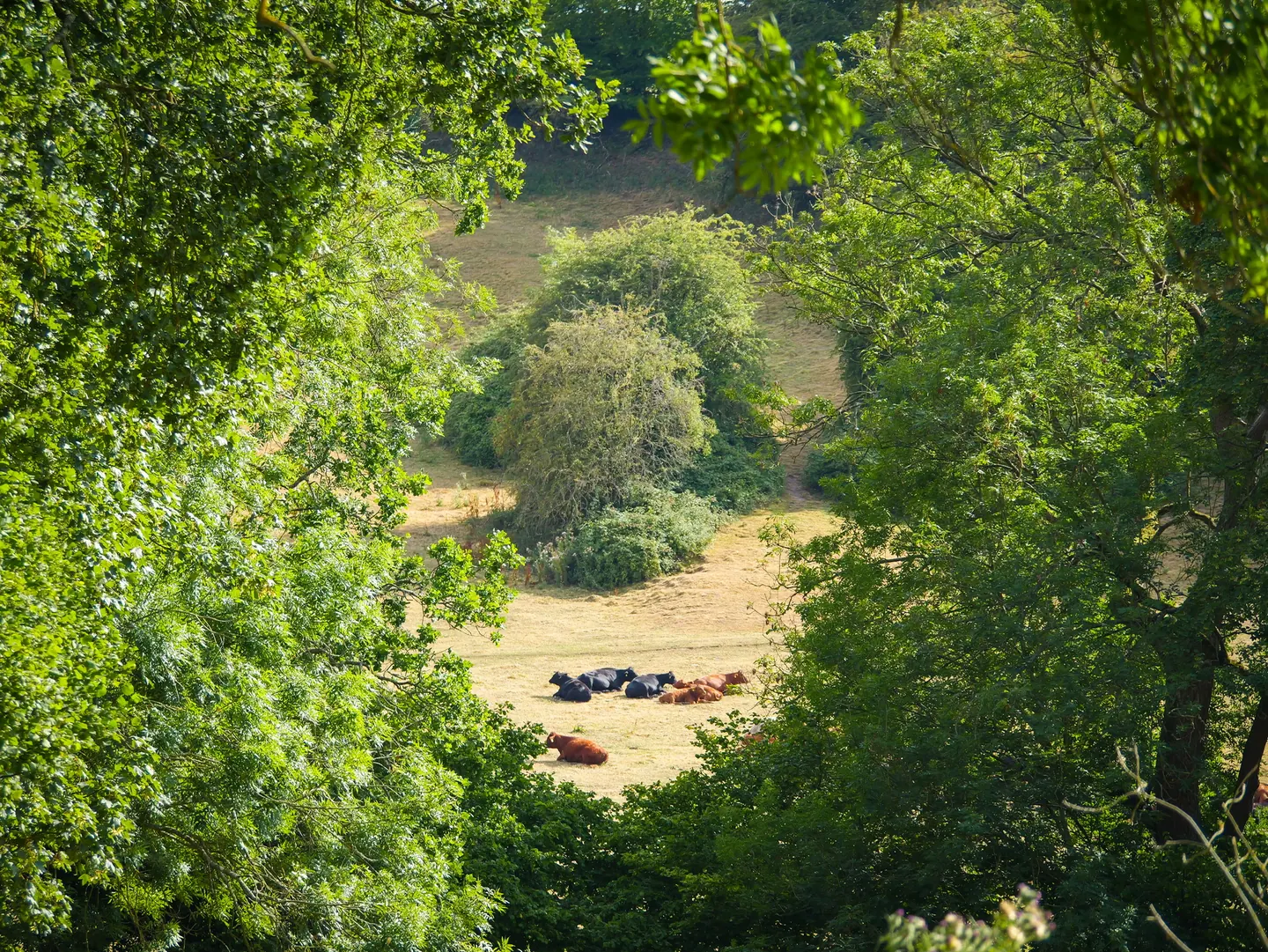
Valleys, woodland, wet ground and a place coming back to life. Explore where our Dexters spend their time — and why each part of the farm matters.
Choose a numbered area to explore. This map tells the story of our grazing system; cattle move as the season and conditions change.
Schematic of our grazing areas · Field positions are approximate. L1–L3 are future links.
Two connected stories: calves growing into finishing cattle, and breeding cows receiving care around their next calving.
Cows and calves spend time together in the main valley. Calves remain at foot and wean naturally before growing cattle move to the Railway Fields.
Find this area on the map ↑Grass, forage, shade and room to move. A few moments with our cattle, including the heifers in the Railway fields.
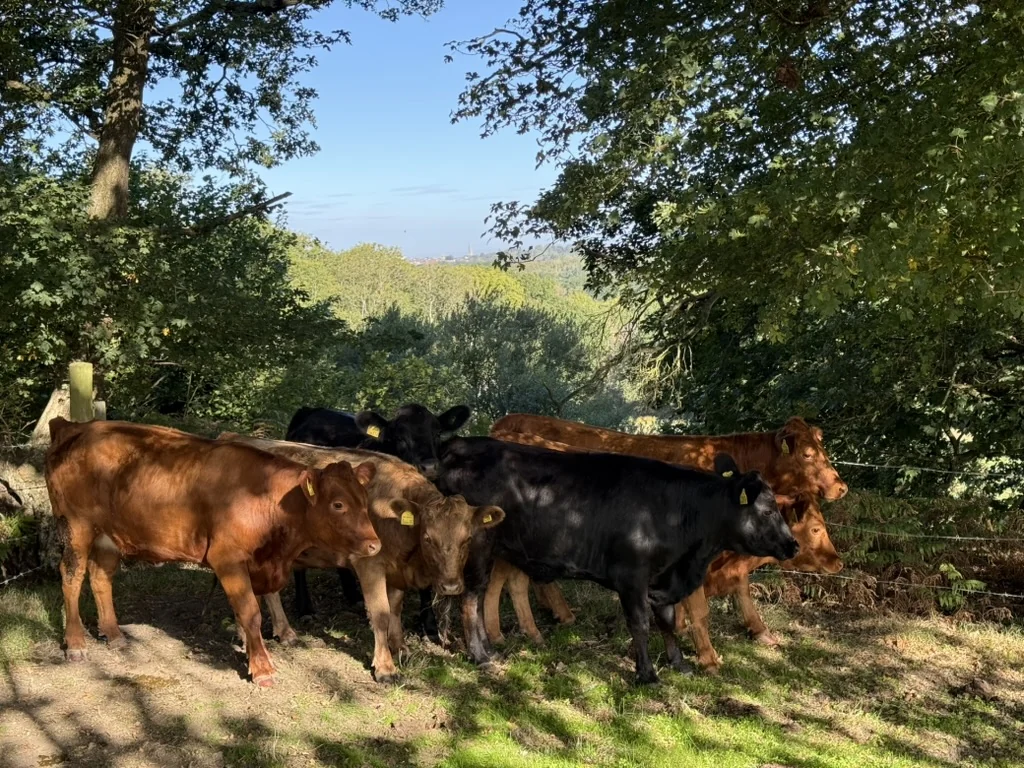
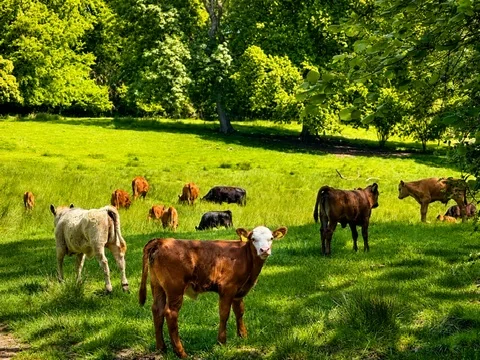
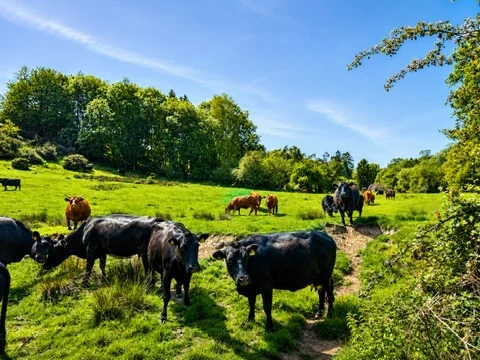
100% grass-fed, slow-grown pedigree Dexter beef. Our approach is low input, with extensive mob grazing across a varied landscape.
Mixed grass forage, with no feed additives. We grow our beef slowly, finishing animals at a minimum of 30 months.
We move cattle through the grazing areas and allow ground to rest. No nitrogen fertiliser or pesticides are used in our grazing system.
Finishing cattle winter outside. Cows near calving can be housed for closer monitoring before returning to the valley with their calves.
Upland, lowland, wetland and wooded areas give the herd a variety of ground. In Rewilding, grazing sits alongside the land’s recovery.
Butterfly monitoring by Sophie and Colin, and the special woodland described in Natural England’s Burderop Wood SSSI citation.
Sophie and Colin’s seven-section survey recorded 104 gatekeepers, three purple emperors and four purple hairstreaks on that July visit.
These are observations from one survey walk, not population estimates or a measure of change caused by grazing. Monitoring also took place in April, May and August 2025.
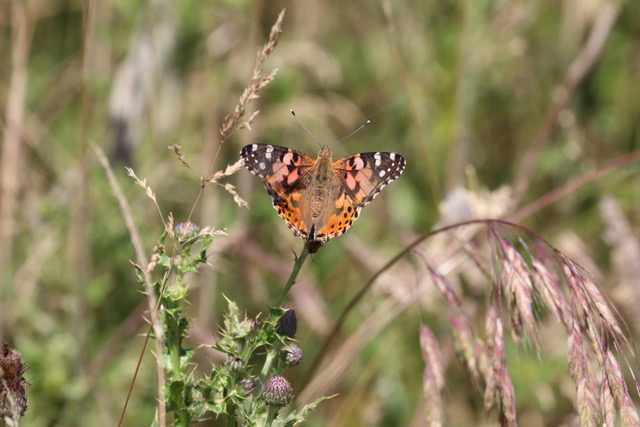
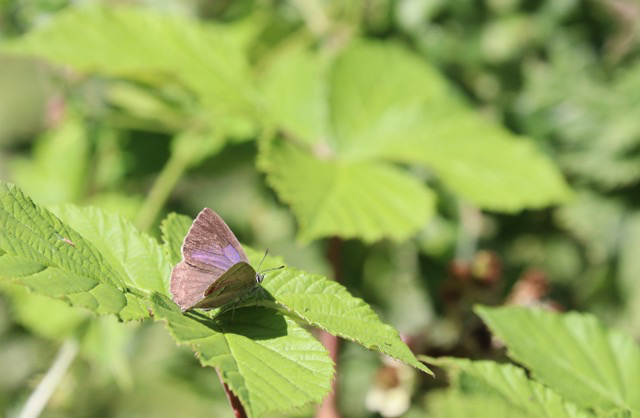
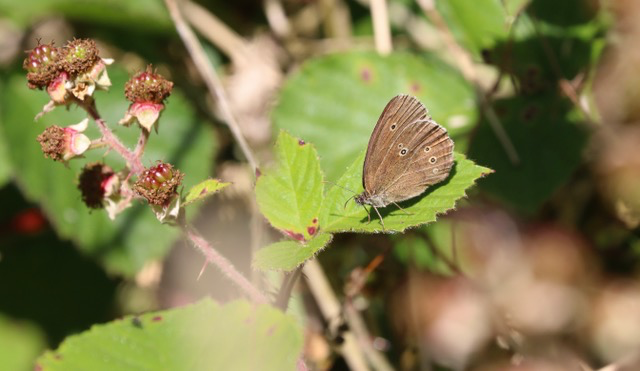
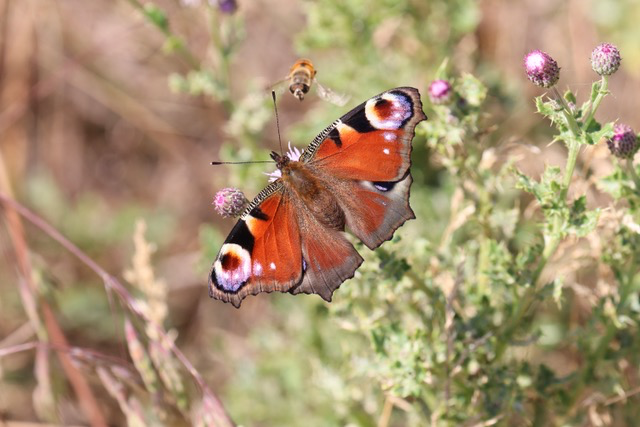
Source: Hodson Farm Butterfly Survey 2025, supplied by Sophie Lowe, 29 November 2025. Photographs from the survey report; credit Sophie and Colin.
Natural England’s citation describes wet ash–maple and acid oak–hazel–ash woodland, with mature oaks, wet flushes and a rich ground flora.
The citation records bluebells, herb-paris and Bath asparagus, with woodland birds including nuthatch and great spotted woodpecker.
Read Natural England’s SSSI citation ↗Recorded in the designated woodland’s citation.
Citation records, rather than a new farm bird survey.
Burderop Wood is the designated SSSI. This page does not describe the whole farm as SSSI, and the interactive field map does not show the designation boundary.
From calves at foot to the final stages, we want every decision to be made with care and consideration. We’re open about how our own Dexter beef is raised and processed.
Calves stay with their mothers and wean naturally. Our cattle graze a varied landscape of upland, lowland, wetland and wooded ground, with a diet of grass and forage.
Health and condition guide our care. Cows close to calving, or with a newborn calf, can come into the farmyard for closer monitoring before returning to the valley.
We use J. Broomhall Ltd in Eastington for non-religious slaughter, with our cattle stunned before slaughter.
Lairage is the holding area before slaughter. Broomhall describes spacious pens, fresh bedding and water, and keeping each customer’s stock separate.
Broomhall’s welfare approach ↗Stress before slaughter can contribute to dark cutting beef, also known as dark, firm and dry (DFD) beef. Calm handling, appropriate transport and well-managed lairage help reduce that risk. Welfare is the priority, and careful handling also helps protect the quality of the meat.
Read AHDB’s explanation ↗Our Dexter beef comes from our own herd in Hodson. We can tell you about the land, the grazing system and the abattoir we use. If you have a question about the provenance of a cut or how it was produced, please ask.
Talk to us about our beef →Mechanical engineer.
Renewable energy work in Scotland.
A family farm here in Hodson.
Dad established our Dexter herd in 2019 as a retirement project. After he died in 2023, we were left with the herd — and a decision about what came next.
I began developing the branding, marketing and direct sales, building a business around slow-grown, 100% grass-fed Dexter beef. Listening to our customers has helped shape our focus on quality, welfare and a low-input way of farming.
I’m a mechanical engineer, and my work takes me into the finance and construction of renewable energy assets in Scotland. Farming has brought a very different kind of challenge — and a chance to build something with our family.
In October 2025, we started serving burgers on the farm. The events have become a way for people who enjoy this landscape to meet us, ask questions and share good food. I want walkers, cyclists and our neighbours to feel welcome to understand what we do here.
One of the most special moments came on 22 July 2026, when my sister and I hosted two dozen guests for a ten-course tasting banquet in the Laundry fields in Hodson Valley, as the sun went down. It was the third anniversary of Dad’s funeral, and we raised a glass to him. It was a really magical moment.
Adrian, Josef & Elisabeth — read our story →Enjoy the public paths, join us at a farm event, or arrange a visit to the butchery. The butcher shop is open by appointment only.